
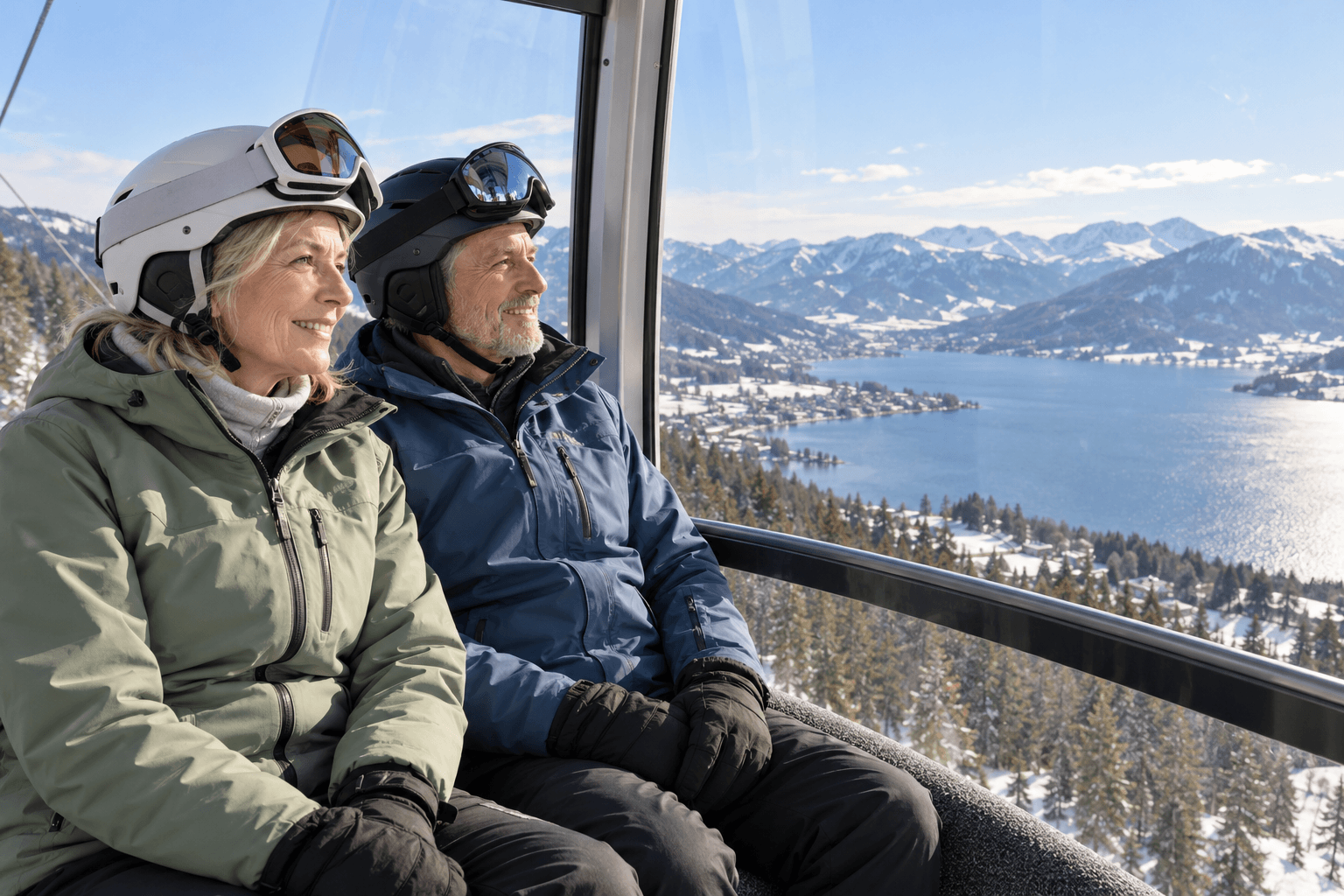
Perhaps you’ve long been tempted by the idea of skiing yourself, instead of just accompanying family or friends to the lift. Or maybe you fondly remember past ski vacations and want to start again after a break. Skiing in older age often raises similar questions: Is my fitness sufficient, how are my joints, and what can I realistically expect from myself? Those who calmly clarify these questions can put their plans on a more reliable foundation. In Tegernsee, you can combine medical care at MedVital with planning a ski vacation for getting started or returning to skiing in the same region.
Skiing at an Older Age Starts with Your Prerequisites
A specific birthday doesn’t determine whether skiing is an option for you. What’s more important is how you are today: What kind of movement is part of your daily life, do you have any complaints, and what experience do you bring? A fit person at 65 has different prerequisites than someone at 45 who has been inactive for years. Therefore, a very different approach to getting started can be sensible even within the same age group.
Those looking for skiing for seniors often want to remain active without overdoing it. For a first ski lesson, learning unfamiliar movements is added; experienced skiers need to assess whether their previous habits still match their current capacity. At MedVital, you can discuss questions about your musculoskeletal system and individual preparation. This doesn’t result in a blanket clearance for the slopes, but it does provide an opportunity to examine personal prerequisites more closely.
Why Preparation is Important for Skiing
When skiing, you need to control movements, react to changes, and maintain your posture even under strain. This includes leg strength, a stable core, and balance, as well as sufficient endurance. Those who start their ski vacation preparation early have time to work on these skills and notice where support might be needed.
The German Society for Orthopaedics and Trauma Surgery particularly recommends that untrained individuals train their legs, core, and pelvis several weeks before a ski vacation, for example, through ski gymnastics. It also names warming up, adequate breaks, and selecting terrain and speed that match one’s own ability as measures for injury prevention. Training does not replace these decisions on the slopes. What feels good in the gym must also be assessed responsibly under changing conditions.
Learning to Ski at an Older Age or Returning After a Break
For your first ski lesson, you don’t have to make up for a childhood spent on skis. Adults bring their own desires and experiences: Some want to try something new with their partner in winter, others finally want to experience for themselves what they’ve only seen from the sidelines. Learning to ski at an older age can be a realistic endeavor if the health prerequisites are met and the instruction is tailored accordingly. Adult programs have long been part of ski schools’ offerings.
Learning to Ski at 40, 50, or 60
Learning to ski at 40 primarily means starting a new sport as an adult. Therefore, you don’t need to compare yourself to children in ski lessons or manage a full day on the slopes from the start. If you want to learn to ski at 50 or 60, it’s equally worthwhile to clarify your goal: Do you want to enjoy easy descents, plan a shared vacation, or just find out if you like the sport?
A manageable goal makes planning easier. Perhaps you initially want a calm start with plenty of time to practice. Uncertainty about speed or falling can be addressed without you having to justify it. A suitable ski school should know what experience you have, what you want to learn, and what limitations need to be considered.
Step-by-Step to Your First Ski Lesson
Look for qualified adult instruction and discuss whether private lessons or a suitable group would be a better fit for you. Lesson duration, learning pace, and terrain should be planned together; regular breaks are part of it. There is no fixed number of days after which every beginner can ski independently.
Equipment also deserves attention. Get advice on suitable skis and well-fitting ski boots, and have the bindings professionally adjusted. For initial attempts, rental equipment can be a practical option before you commit long-term. Medical consultation clarifies health questions; you’ll learn braking, turning, and on-piste behavior in ski lessons.
Returning After a Longer Break
If you used to ski, much of it might still feel familiar. Nevertheless, your fitness, mobility, or any complaints may have changed during the break. A refresher course provides an opportunity to resume technique under guidance and assess your current ability before choosing more challenging runs.
Plan the first few days so you can adjust the scope and pace. Former favorite slopes don’t have to be the first goal. Likewise, experienced skiers are allowed to change their habits, such as skiing for shorter periods or taking more frequent breaks. Continuing to enjoy a familiar sport can also mean doing it differently today.
How You Can Specifically Prepare for Skiing
Whether you’re skiing for the first time or returning after a long break: Start regular exercise several weeks before your vacation, if possible. The initial goal is to build a foundation that suits your current fitness. Simple exercises at home can be helpful to start; those who already train regularly can build on that with a targeted program for legs, core, and balance.
- Build leg strength: Sit on a stable chair without wheels, place your feet hip-width apart, and stand up slowly. Then sit back down in a controlled manner. Try five repetitions first, ideally without pushing yourself up with your arms.
- Strengthen calves: Hold onto a stable chair back and slowly lift both heels. Lower them back down just as controllably. Start with five repetitions.
- Practice balance: Stand in front of a wall and support yourself with your fingertips. Lift one foot slightly off the ground and hold the position for five to ten seconds. Repeat the exercise three times per side.
- Add endurance: For example, take brisk walks at a comfortable pace for you, or go cycling. Start with an amount you can manage well and gradually increase it.
In case of pain, significant uncertainty, or after surgery, please coordinate suitable exercises with your medical or physical therapy team.
Preparation also includes a material check: Have the bindings professionally adjusted and check the fit of ski boots and helmet. On the slopes, start with a warm-up and easy terrain. After a longer break, a refresher course is recommended so you can resume familiar movements under guidance.
Combine a Health Resort Stay with Movement and Regeneration
At MedVital, you can consciously take time for your health, even if no acute complaints are in the foreground. The health resort programs focus on different areas and combine medical care with movement and regeneration.
If you also wish to ski during your stay, bring this up during your health resort consultation. Together, you can discuss how slope times, treatments, and relaxation fit your health prerequisites and personal program. For some, the focus is on first experiences on skis, for others it’s reconnecting with a familiar sport, all combined with time to take care of one’s own well-being.
Even those primarily seeking a break from everyday life will find suitable connections: Massages and baths offer space for relaxation, while other health resort programs focus more on mental balance and stress management. This way, a health vacation can be designed to address your personal concerns while also leaving room for activities in the Tegernsee mountain world.
Key Criteria Before Your Ski Vacation
A medical check-up doesn’t become mandatory just because you’ve turned 50 or 60. However, if you have existing conditions, current complaints, or uncertainty about your capacity, a medical consultation is advisable. Describe as specifically as possible what you notice: When does your knee hurt, what movements trigger back pain, and how does your condition change under exertion? This allows for a better determination of which examination is appropriate for you.
For the consultation, you can note the following points:
- Your previous skiing and sports experiences, as well as longer breaks from physical activity.
- Complaints in the knee, hip, or back, restricted movement, and a feeling of instability.
- Known illnesses, previous injuries, surgeries, and current medications.
- Your plan: first ski lesson, returning to skiing, or a vacation with regular days on the slopes.
For osteoarthritis, adapted movement is fundamentally part of the treatment. However, this does not mean that skiing is suitable for every affected joint. If you are considering skiing with osteoarthritis or experience knee pain while skiing, complaints, joint function, and planned exertion should be discussed individually. Ignoring pain or using painkillers to continue skiing does not replace this assessment.
There is also no general clearance for skiing after knee surgery or skiing with a knee prosthesis. The American orthopedic professional society AAOS explicitly lists skiing after knee replacement among the more strenuous activities, for which less strenuous sports are preferable. Therefore, discuss your desire with your treating team. Which sport and which timing are appropriate cannot be derived from a general waiting period; under certain circumstances, another activity may be the more suitable choice.
Medical Consultation and Preparation at MedVital
In conservative orthopedics at MedVital, the anamnesis, meaning the discussion about your medical history, and the examination are central. Based on this, it is discussed which further diagnostics or treatment are useful. If joint or back complaints accompany your plans, an orthopedic consultation in Tegernsee is a possible first step.
Depending on your needs, physiotherapy at MedVital and individual personal training can also play a role. While physiotherapy addresses complaints and movement restrictions, training is adapted to your prerequisites and goals. Which offerings suit you should be clarified together. A specific treatment does not automatically make you fit for skiing; your individual situation remains decisive.
Skiing Around Tegernsee and Time for Relaxation
Those who want to combine their health vacation with skiing will find MedVital in Tegernsee a suitable starting point. Various ski areas and practice slopes are available in the vicinity: the Oedberg near Gmund, the Kirchberg and Hirschberg lifts in Kreuth, and the Spitzingsee-Tegernsee ski area. An overview of the different options for beginners and experienced skiers is provided by the tourism page Skiing in Tegernsee.
The regional skiing opportunities allow for planning movement in the snow as part of your vacation day. Perhaps you spend half a day in ski lessons or on familiar runs and then return to MedVital, where there’s still time for a treatment, personal consultation, or a quiet afternoon. What daily schedule is suitable depends on the chosen ski area, current conditions, and your scheduled appointments. This way, both the joy of skiing and relaxation can find their place in your stay.
Frequent Questions About Skiing in Older Age
Can I still learn to ski at 50 or 60?
Getting started can also be an option at 50 or 60. Your health prerequisites, your capacity, and instruction that matches your ability and learning pace are decisive. If you are unsure or have complaints, have them medically assessed beforehand. You don’t need to compare yourself to younger beginners or be able to ski independently after a certain number of days.
How do I prepare for skiing after a long break?
Start appropriate preparation several weeks before your vacation, if possible. Strength, endurance, and balance deserve attention, as do existing complaints. A refresher course can help you resume familiar movements and assess your current ability. Plan your first days on the slopes so that there is enough time for breaks.
Can I combine a health resort stay at MedVital with skiing?
Bring up your wish during your health resort consultation. Together, you can discuss if and how skiing fits your health prerequisites and the chosen program. Depending on individual planning, shorter times on the slopes can leave room for treatments, consultation, and relaxation. The ski area and travel time should also be considered when planning your day.
Who can I contact with questions about ski schools, equipment, and ski passes?
Feel free to ask your questions when planning your MedVital stay. We will inform you where to find suitable ski lessons, rent equipment, or get information about lift tickets and current prices. Ask the team what support they can offer you for orientation on site. An initial overview of the region’s skiing opportunities can be found under Skiing in Tegernsee.
Can I simply combine relaxation and exercise at MedVital?
Even without acute complaints, you can use a stay to take time for exercise, health prevention, and relaxation. MedVital’s health resort programs have different focuses; for example, massages and baths are complementary options. You can clarify which offers suit your wishes during a personal consultation.
Request a consultation before your ski vacation
Perhaps you first want to find out if a ski lesson is an option for you, or continue a familiar sport with more clarity about your capacity. At MedVital in Tegernsee, you can discuss your plans and your health questions. This way, you can determine what medical advice and preparation suit you and how you can integrate them into your travel plans.


